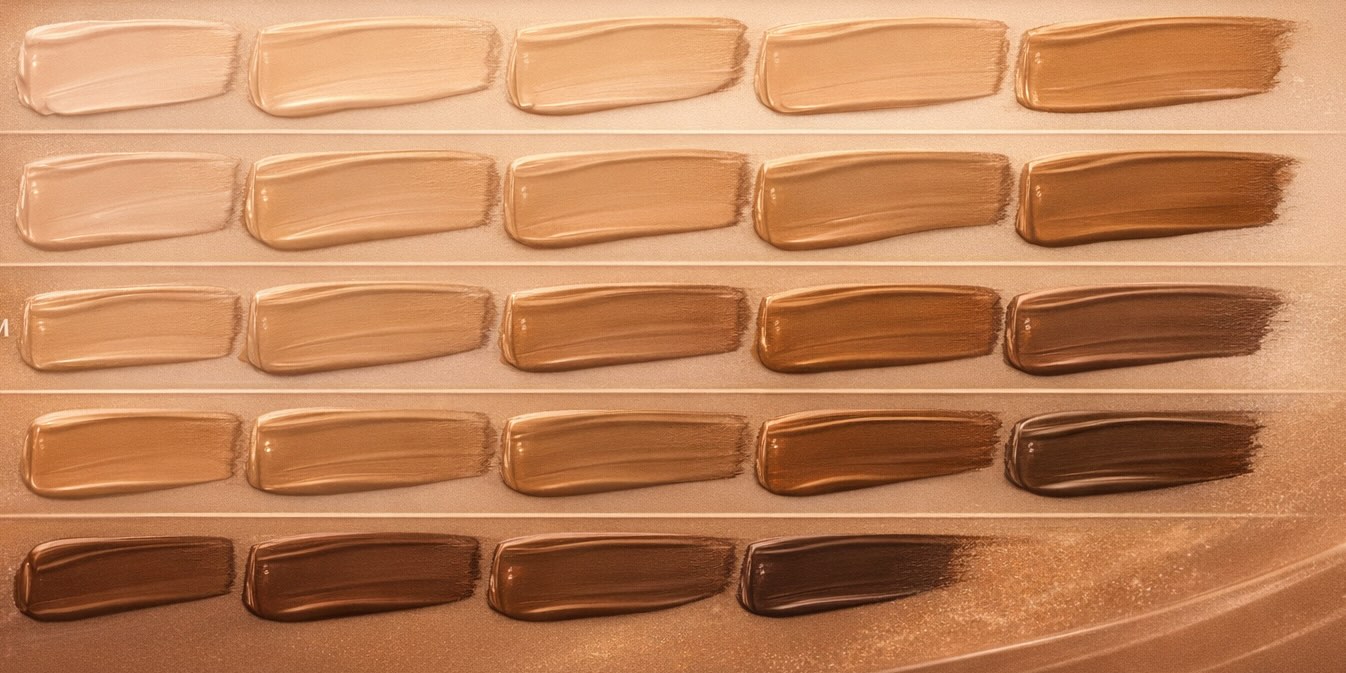
Quick Answer
Choosing the right foundation doesn't just make your skin look better, it makes your entire makeup look more natural, seamless, and flawless. If you've ever experienced a foundation that looks too light, too dark, or turns gray after a few hours, chances are you've picked the wrong shade. Here's how to choose the perfect one.
- Identify your undertone (warm, cool, neutral)
- Pick the right shade depth (fair to deep)
- Test on your jawline near your neck, not your hand
- Wait 5–10 minutes to check oxidation
Once you've found your perfect shade, check out my best light coverage foundation guide for lightweight formulas that look the most natural.
If foundation looks "off," it's usually not the formula. It's the shade. And for me, choosing the right shade is one of the most important parts of picking a foundation.
I'm Maddie. I have oily skin and I live in a hot, humid climate, so I'm extra picky about anything that looks heavy, turns orange, or makes my face and neck look like two different people. When the shade is right, everything looks smoother. When it's wrong, you can tell immediately.
The good news: most brands now have a real shade range. You're not stuck choosing between "light" and "medium" anymore. For example, Maybelline Super Stay Lumi-Matte comes in 24 shades (and I reviewed it here: Maybelline Super Stay Lumi-Matte Foundation Review).
Maddie's reality check
Your shade match should look boring. Like… nothing happened. If it's "snatched" but your neck is screaming, it's the wrong shade.
1. Identify Your Skin Undertone
Your undertone is the color beneath the surface of your skin, and it doesn't change with the seasons. Getting the undertone right is what makes foundation look skin-like instead of "makeup sitting on top."
- Warm undertone: Yellow, golden, or peach tones
Look for shades labeled Warm / Yellow / Golden - Cool undertone: Pink or rosy tones
Choose Cool / Pink / Rosy - Neutral undertone: A balance of both warm and cool
Look for Neutral / N
Quick tip
Check the veins on your wrist:
- Green veins → warm
- Blue or purple veins → cool
- Both → neutral
2. Choose the Right Shade Depth
Shade depth is just how light or deep your skin tone is. This is the "fair to deep" spectrum. I like to pick 2–3 close shades in depth, then I fine-tune undertone.
- Very fair skin: Fair / Porcelain
- Light to medium skin: Light / Light Medium
- Medium to tan skin: Medium / Tan
- Deep skin tones: Deep
Avoid choosing a foundation that's too light, because it can make your face look unnatural and mismatched with your neck. Once you find the right shade, you can explore different formulas based on your needs—like full coverage options if you need maximum coverage for long days or events.
Find Your Foundation Shade
Use this table to narrow down your foundation shade based on undertone and shade depth. Start with your undertone, then move across to find your depth range.
| Undertone | Fair | Light | Medium | Tan | Deep |
|---|---|---|---|---|---|
| Warm | Porcelain · Fair Warm | Light Warm · Golden | Warm Beige · Golden | Warm Tan · Honey | Warm Deep · Cocoa |
| Cool | Porcelain · Fair Cool | Light Cool · Rosy | Cool Beige · Rosy | Cool Tan · Neutral Cool | Cool Deep · Espresso |
| Neutral | Fair Neutral | Light Neutral | Medium Neutral | Tan Neutral | Deep Neutral |
| Olive / Muted | Fair Olive | Light Olive | Medium Olive | Tan Olive | Deep Olive |
💡 Maddie tip: If most foundations look orange or pink on you, try the Olive / Muted row, even if brands don't label it clearly.
3. Test Foundation the Right Way (Very Important)
This is where most people get sabotaged.
Don't: Test on your hand (NOT accurate)
Do: Test along your jawline, close to your neck
- Apply 1–2 shades side by side (or 2–3 if you have options)
- The right shade will blend in and almost disappear after a few minutes
- Wait 5–10 minutes to see if it oxidizes (darkens)
4. Watch Out for Oxidation
Some foundations darken after being exposed to air and your natural oils. This is extra common if you're oily (hi, me). For more on why this happens and how to prevent it, see my oil absorbing foundation makeup guide.
If your foundation oxidizes:
- Choose a shade half a tone lighter
- Look for formulas labeled non-oxidizing (and still do a wear check)
5. Don't Forget Your Skin Type
The right shade matters, but the right formula is what makes it last. Shade + formula together is what gives that "flawless all day" base.
Not sure what your skin type is? I wrote a complete guide on how to identify your skin type that walks you through the quick tests and what to look for. Once you know whether you're oily, dry, combination, or normal, choosing the right formula becomes way easier.
- Oily / combination skin: matte or semi-matte, oil-free formulas
- Dry skin: dewy, glow finishes with hydrating ingredients
- Sensitive skin: fragrance-free formulas, always patch test
The right shade + the right formula = flawless skin all day
6. Still Deciding Between Two Shades?
If you're stuck between two, here's my practical advice:
- Choose the slightly darker one (especially if the lighter one looks ashy)
- Or mix both shades together
- Adjust with bronzer or highlighter if needed
Final Thoughts
A flawless base starts with the right foundation shade. It's not about being lighter, it's about looking natural and skin-like. Once you understand your skin, your makeup will instantly level up. And if you're wondering how to choose a foundation that looks the most skin-like overall, check out my guide on what is the most natural looking foundation.
My Shade: Maybelline 220 (But That Doesn't Mean It's Yours)
For reference: I personally use Maybelline shade 220, which is a warmer and slightly darker shade. It works for me in depth and undertone, and it holds up well with how my skin behaves in humidity.

I lean toward warmer undertones with a bit more depth because lighter or cooler shades tend to look ashy or pink on me. Shade 220 gives me that natural, skin-like finish without turning orange or gray throughout the day.
But your best shade might be totally different. Even if we look similar in photos, undertones are sneaky, and formulas can oxidize differently on different people. What works on my oily skin in a humid climate might not be the right choice for your skin type or environment.
Brands Have Shade Ranges for a Reason (Use Them)
Most brands offer a whole range of shades for many skin tones now, and that's a good thing. Instead of searching for "the one" immediately, use the range to shortlist 2–3 close options and test properly.
Example: Maybelline Super Stay Lumi-Matte has 24 shades. If you're considering it, I go into wear, finish, and texture here: Maybelline Super Stay Lumi-Matte Foundation Review.
Maddie is here to share beauty knowledge and help you elevate your skincare and makeup routine. Love ya. 💕
Frequently Asked Questions
Where should I swatch foundation to find my shade?
Jawline toward the neck, always. Pick 2–3 close shades, swipe them next to each other, then check in daylight. Wrist swatches are cute but they lie.
How do I know if my foundation is the wrong undertone?
If you look orange, the shade is usually too warm. If you look pink, it might be too cool. If you look gray or dull, it can mean the shade is too light, too saturated, or the undertone family is wrong. Compare two undertones side-by-side in daylight.
Why does my foundation turn darker after a while?
Oxidation or oil interaction. Wait 5–10 minutes at minimum (and ideally 30–60 minutes if you can) before deciding. If it shifts darker, try one shade lighter.
What's the best foundation for oily skin?
If you're oily like me, you'll usually do best with long-wear formulas and soft-matte finishes. I keep my updated picks here: best foundation for oily skin.
Is powder or liquid foundation better?
Depends on your skin type, finish preference, and how you wear makeup day-to-day. I break it down with real pros/cons here: powder or liquid foundation.
Should I match my face or my neck?
I usually match my neck/chest for the most natural overall look, then I adjust the face with concealer, bronzer, or color correction if needed. That avoids the "floating head" situation.