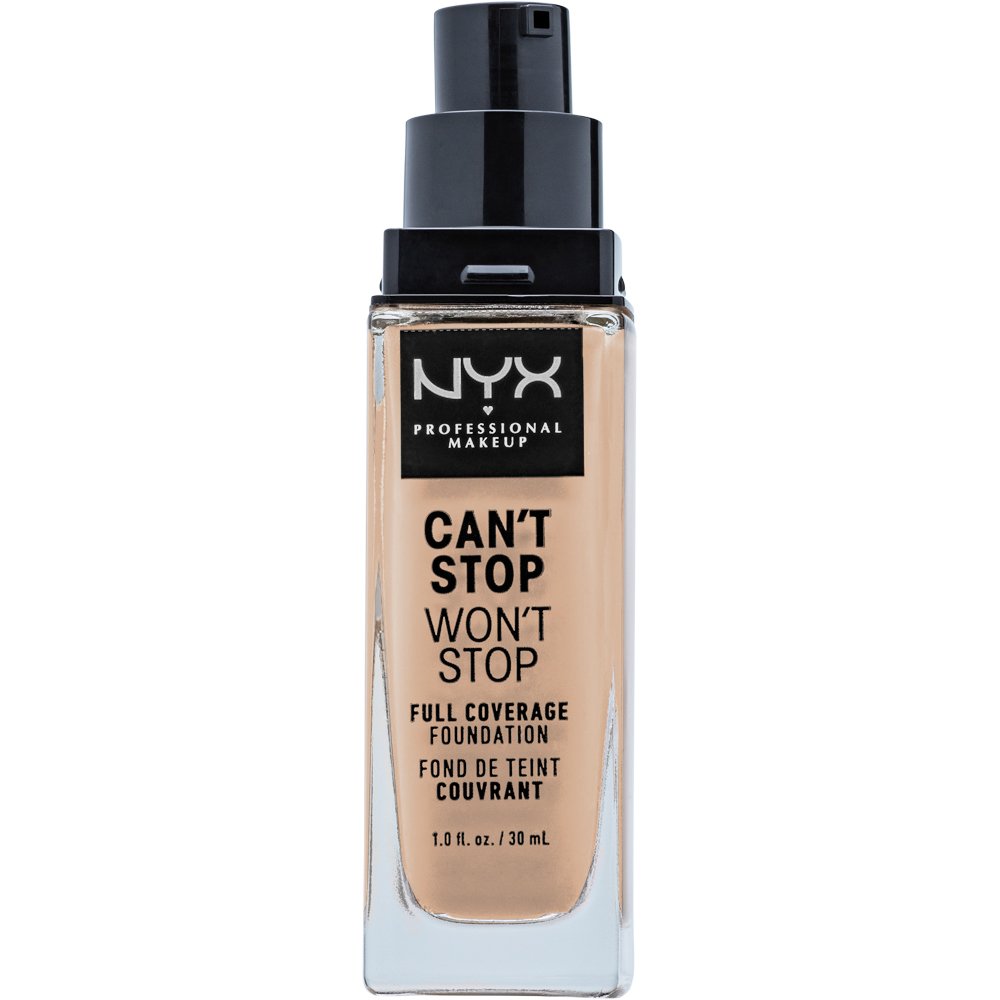
Key Takeaways
NYX Can't Stop Won't Stop foundation is still a good pick if your skin runs oily and you want a matte, longer-wearing base with stronger coverage than a skin tint or lightweight everyday foundation. It is not the most forgiving formula on the market, though, so whether you love it or hate it often comes down to your skin type, your prep, and how much product you apply.
This is one of those foundations that makes a lot of sense on paper. Matte finish, long-wear claims, full coverage, broad shade range, and a price point that stays firmly in drugstore territory. For oily skin, that combination is always going to get attention.
My take is pretty simple: it is good, but it is specific. This is not a soft-focus, forgiving, almost impossible-to-mess-up foundation. It is a performance foundation. If your skin and application style match what it wants, it can look really solid. If they do not, it can go from impressive to annoying pretty quickly.
Where to buy NYX Can't Stop Won't Stop foundation
My recommended shopping options by region. Links may be affiliate links.
| Region | Notes | Buy |
|---|---|---|
|
International
Best option
|
Easy international option if you already know your shade or want to compare listing details. | Shop International → |
|
Vietnam
|
Shopee VN listing. Check seller ratings, shade name, and authenticity markers before buying. | Shop Vietnam → |
*Links may be affiliate links. If you buy through them, I may earn a small commission at no extra cost to you.
What kind of foundation is NYX Can't Stop Won't Stop?
This is a matte, long-wear liquid foundation built around higher coverage, better oil control, and a more locked-in finish than a typical everyday natural foundation. It has that classic performance-base personality: it spreads with slip, sets down fairly well, and is clearly trying to hold up through a longer day instead of just looking pretty for the first hour.
The texture sits somewhere in the middle. It is not watery like a tint, but it is not extremely thick either. That is part of why people get confused by it. It can feel lighter than expected while still giving more coverage than expected. So when people ask what category it belongs in, I would call it a matte long-wear foundation with real coverage, not a skin tint, not a serum foundation, and definitely not a glowy comfort formula.
Who will like this foundation?
If you have oily or combination skin and you want your base to stay polished for longer, this kind of formula makes sense. It is especially appealing if you like foundations that can cover redness, post-acne marks, or unevenness without needing a huge amount of concealer on top.
It also suits people who prefer a more perfected finish over a very skin-like, almost invisible finish. If your idea of a good foundation is something that makes your face look smoother, more even, and more controlled, there is a good chance you will understand why this one still has fans. For readers comparing more budget-friendly options, it also makes sense alongside my guide to the best drugstore foundation for oily skin.
Who will not like NYX Can't Stop Won't Stop?
If your skin is dry, flaky, or easily dehydrated, this foundation can feel stricter than you want. It is not the sort of formula that quietly forgives rough texture around the nose or mouth. It notices those areas, and sometimes it makes sure everyone else notices them too.
It is also not the best match for people who prefer sheer, barely-there coverage. If you naturally lean toward lighter base products and hate feeling like your makeup is doing too much, you may simply be happier with something softer. In that case, my best light coverage foundation guide is a better place to start.
Is NYX Can't Stop Won't Stop actually good for oily skin?
Yes, and oily skin is where this foundation makes the most sense. The matte finish, smoother dry-down, and oil-controlling feel all work in its favor if your usual problem is that foundation starts sliding, separating, or turning shiny too fast.
I would not call it the only good option for oily skin, but I do think it belongs in the conversation. If your priority is a base that looks more controlled rather than more radiant, it earns its place. It also fits well with the type of formulas I talk about in my best foundation for oily skin guide and my oil-absorbing foundation roundup.
Is it truly full coverage, or more medium-full in practice?
In real life, I think the honest answer is medium-full to full. One thin layer can already cover a lot, especially if you use a brush. A second light pass can push it into proper full-coverage territory. So yes, it can absolutely become full coverage, but it does not always look best when you force it there.
This matters because some people buy it expecting maximum coverage in one swipe and others buy it expecting a mask. Neither description is quite right. It is flexible enough that you can control the result, but only up to a point. If you want that extra perfected finish without going straight to a very heavy luxury formula, it also belongs near the products I cover in best full coverage foundation for oily skin.
Does it look cakey, dry, or heavy in real life?
It can, but that depends on how you use it. This foundation is one of those formulas where the line between "smooth matte" and "a bit too much" is not very wide. If you apply too much product, press extra product into texture, or pile powder over it aggressively, it can start looking thick faster than you expect.
On the other hand, if you keep the layer thin and only build where you actually need more coverage, it looks much more balanced. I would not call it the heaviest foundation in this category, but I also would not call it foolproof. It rewards restraint.
How long does it really last outside brand claims?
Brand claims always sound heroic. Real-life wear is usually more normal. On oily skin, I think this foundation can hold up well through a standard day if your prep and powder placement are sensible. What I would not do is read "up to 24 hours" and imagine perfect, untouched skin late into the night.
In practice, it is better to think of it as a good long-wear drugstore foundation rather than a miracle. It tends to outlast softer, glowy formulas, which is why it fits naturally beside the options in my best long-lasting foundation for oily skin guide. You may still want a midday blot or small touch-up, but that is very different from full-on makeup collapse.
Why does it work well for some acne-prone users but not everyone?
Acne-prone skin is never just one thing. Some acne-prone people are also oily and do very well with matte, less emollient formulas because they feel cleaner and stay put better. Others are acne-prone but also dehydrated, irritated, or peeling from treatments, and that is where this kind of foundation can become a bad match.
So when people say it works for acne-prone skin, that can be true. When others say it made their texture look worse, that can also be true. "Noncomedogenic" is useful, but it is not a universal guarantee. If breakouts are one of your main concerns, I would pair this review with my guide to best foundation makeup for acne-prone skin.
What ingredients make it feel matte and long-wearing?
This formula has a very performance-driven ingredient profile. You get silicones for slip and smoothing, volatile solvents for a faster, more locked-in feel, and absorbent or blurring ingredients that help reduce shine and keep the finish from looking too creamy. That is why it feels more structured than a dewy, skincare-style foundation.
In normal language, the formula is built to spread, set, blur a little, and resist breakdown. That combination is exactly what oily skin often responds well to. It is also why the finish tends to look more controlled than radiant.
Does it oxidize or change tone through the day?
Slightly, for some people. I would not describe this as one of the worst oxidizers I have ever seen, but it is smart to expect a little settling or darkening, especially if your skin runs oily through the day. Matte long-wear formulas can shift subtly once they have been sitting on skin oils for a while.
That is one reason I would not rush shade matching. If you are unsure, swatch, let it sit, and compare it in normal daylight instead of trusting the first five seconds. My full guide on how to choose foundation shade will help more than guessing and hoping for the best.
Is the formula silicone-heavy, and does that matter?
Yes, it leans clearly silicone-heavy, and in this case that matters quite a bit. That silicone structure is a big part of why the foundation feels smoother going on, helps blur a little, and dries down in that more controlled, matte way. It is also why it behaves more like a classic long-wear base than a fresh, hydrating complexion product.
For oily skin, that can be a good thing. It can help makeup sit more evenly and resist slipping. For some people who dislike silicone-heavy textures, though, the formula can feel a little too polished or too "makeup-y." If you are comparing base textures more broadly, my powder or liquid foundation guide can help you figure out which direction suits your skin and routine better.
How should you apply it: brush, sponge, or fingers?
My preference here is pretty simple. Use a brush if you want the most coverage and the smoothest, more perfected finish. Use a sponge if you want to soften it a little and make the foundation look slightly less intense. Fingers are the least exciting option for this formula unless you are only using a very small amount.
If you are texture-prone, a damp sponge can be the safer choice because it stops you from overloading the skin too quickly. If you are oily and want stronger hold, a brush usually gives the result people are hoping for when they buy this kind of foundation. Start with less product than you think you need, then build only where you actually want more coverage. For a complete walkthrough of the whole application routine for oily skin, see my guide on the best way to apply foundation on oily skin.
Does it emphasize pores, texture, or fine lines?
It can, especially if you apply it heavily or use it on skin that is not sitting smoothly that day. Pores and texture are where this foundation shows its personality. It wants decent prep and a controlled amount of product. When it gets that, it can look smooth. When it does not, it can settle and draw attention to the exact areas you were trying to blur.
If large pores are one of your biggest concerns, I would not automatically rule this formula out, but I would be more careful with application. A thin layer plus targeted pore-blurring prep makes a big difference. For more focused help, see my guide to the best foundation for large pores and oily skin.
Is the shade range still a selling point in 2026?
The shade range is still one of the more attractive parts of the product. Historically, this foundation stood out because it launched with a broad range and more undertone nuance than many drugstore foundations offered at the time. That still matters.
The more practical question in 2026 is not just whether the shade range is good on paper. It is whether your market actually stocks the shades well. That is where things get more complicated. Some regions still show it as a broad-range line, while real shopping availability can feel patchier depending on where you live and where you shop.
Is it being phased out or harder to find in some markets?
It does look a bit less consistent than it once did. That does not necessarily mean it is fully gone, but it does mean I would not assume every shade is easy to find everywhere. Some shoppers are already treating it like a foundation they need to grab while they still can, especially if they have a very specific shade match.
So my advice here is practical, not dramatic: if this is already your exact match and your skin loves it, do not wait forever to repurchase. If you are just exploring options, keep an open mind and compare it with newer formulas too. For a softer drugstore matte comparison, you can also read my Maybelline Super Stay Lumi Matte foundation review.
How does it compare with other foundation styles?
Compared with a cushion foundation, this feels more coverage-driven, more matte, and more deliberate. If you love quick, fresh, easy makeup, it may feel like more work than you want. If you want a stronger, longer-wearing base, that extra structure is the point. If that softer format sounds more like you, have a look at my guide to the best cushion foundation for oily skin.
Compared with many modern natural-matte formulas, NYX Can't Stop Won't Stop is less forgiving but often more obviously long-wearing. That is why I think it still has a place. It knows exactly what kind of foundation it wants to be.
Pros and cons
Pros
- Good for oily skin if you want a matte, more controlled base.
- Coverage is strong without the formula feeling extremely thick.
- Longer-wearing than many softer drugstore formulas, especially in humidity.
- Works well for targeted building if you do not overapply.
- Broad shade concept remains one of the product's strongest selling points.
Cons
- Can cling to dryness and make flaky areas look worse.
- Not very forgiving on texture if your prep is off.
- Can turn cakey fast if you use too much or over-powder.
- Shade availability may vary more by market than you would expect.
- Not the best match for sheer-base people who want something easy and invisible.
My final verdict
NYX Can't Stop Won't Stop foundation is still a solid matte drugstore foundation, and I completely understand why oily-skin users keep coming back to it. It offers better structure, better coverage, and better oil-control behavior than a lot of lighter, prettier-on-day-one formulas that do not survive real life nearly as well.
That said, this is not one of those foundations I would recommend blindly to everyone. It is best for people who want a long-wear matte base and are willing to work with a formula that has clear preferences. Keep the layer thin, prep properly, and choose it for the right skin type, and it can absolutely earn its place in your routine.
My short version: buy it if you are oily, want coverage, and care about wear time. Skip it if you are dry, flaky, or chasing a soft, effortless skin tint feel.
Maddie is here to share beauty knowledge and help you build a makeup routine that actually works in real life.
Frequently Asked Questions
Is NYX Can't Stop Won't Stop good for oily skin?
Yes. This is where the foundation makes the most sense. The matte, longer-wearing formula works much better for oily and combination skin than for dry or flaky skin.
Is NYX Can't Stop Won't Stop really full coverage?
It can be. I would call it medium-full in a thin layer and full coverage once you build it a bit more.
Does it oxidize?
It can shift slightly through the day, especially on oilier skin, so it is smart to let your swatch sit before choosing a shade.
Is it good for acne-prone skin?
It can work well for some acne-prone users, especially if they are also oily, but it is not automatically right for every acne-prone skin type.
Is it being discontinued?
It seems harder to find in some places, so availability may depend on your market and your shade. I would check stock before getting attached to a specific match.